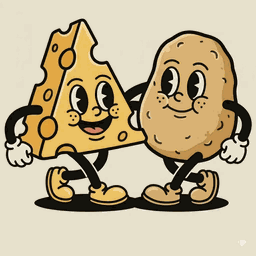
 치즈감자
Korean Texting Abbreviations: From ㄱㅅ and ㅇㅋ to the Legendary 헐
If you have ever peered over a Korean friend's shoulder on the subway while they type lightning-fast on KakaoTalk, their screen might have looked like broken mechanical code: 「ㅇㅋ 7시 ㄱㄱ ㄹㅇ ㄱㅅ!」 To an outsider, it resembles keyboard smashing. To a native speaker, however, it is crisp, effortless communication written using initial consonant abbreviations known as 초성 (choseong).
Korean Hangul syllables are composed of initial consonants, vowels, and optional final consonants. By dropping the vowels and typing only the first consonant of each syllable, Korean smartphone users can send full thoughts in a fraction of a second. But using these abbreviations at the wrong moment can ruin a job or deeply insult an elder. Here is your definitive guide to real Korean texting slang.
Textbook expressions versus initial-consonant slang
Cheese and Potato: The office chat disaster
Watch what happens when Cheese (🧀) discovers Korean texting abbreviations and decides to try them out on everyone—including the company team leader (팀장님).
Potato quickly intervenes and shows Cheese how native speakers naturally use these shortcuts with friends and game buddies.
The essential initial-consonant dictionary
Here are the core abbreviations that every 20- and 30-something Korean uses on KakaoTalk, Instagram DMs, and online gaming chats daily:
ㄱㅅ (감사 - Thanks): The universal shortcut for saying thank you. Often doubled as ㄱㅅㄱㅅ (thanks thanks).
ㅇㅋ (오키 - Okay): Borrowed from the English 'OK'. Friendly and neutral.
ㅇㅇ (응응 - Yeah / Yup): The fastest way to confirm agreement in casual banmal. Never use this with superiors!
ㄴㄴ (노노 - No no): Derived from 'No No'. Used to decline a suggestion or dismiss a worry ('Don't worry about it' 걱정 ㄴㄴ).
ㅈㅅ (죄송 - Sorry): Short for 죄송합니다 or 죄송. Use this only for minor social slip-ups with friends like running five minutes late.
ㄹㅇ (레알 - For Real): An phonetic transliteration of the English word 'real'. Used as an interrogative (ㄹㅇ? = 'Are you serious?') or affirmative (ㄹㅇㅋㅋ = 'Honestly so true').
ㄱㄱ (고고 - Let's Go): Short for 'Go Go'. Used to enthusiastically accept plans: '노래방 ㄱㄱ' (Let's head to karaoke!).
ㅊㅋ (축하 - Congrats): Short for 축하해. Often doubled as ㅊㅋㅊㅋ for birthdays and promotions.
PC bang and online gaming speed culture
Nowhere is initial consonant slang more intense than in South Korea's vibrant esports and PC bang gaming culture. In fast-paced multiplayer games like League of Legends, Overwatch, or Valorant, taking hands off the mouse to type full words results in immediate in-game death.
Gamers rely on ultra-compact two-letter shorthand: ㅅㄱ (수고 - 'good game' or 'well played'), ㅈㄱ (잠깐 - 'wait one second'), and ㄷㅊ (닥쳐 - 'be quiet', though highly aggressive!). When a team scores an effortless round victory, the chat scrolls with ㅈㅈ (Good Game, borrowed from GG) and ㄱㅅ.
Modern hybrid slang: Numbers and compound contractions
Beyond pure consonant initials, Korean digital slang frequently fuses numbers and phonetic wordplay. For example, you will constantly see the phrase 1도 없어 (literally 'don't even have 1 degree of it'), which means having absolutely zero interest, knowledge, or patience for something. Instead of typing the full grammatical negation 전혀 없습니다, young Koreans casually text: 「나 그 사람 관심 1도 없어」 ('I don't care about that person in the slightest').
Another pervasive term is 개이득 (huge unexpected gain or jackpot bargain), combining the slang intensifier 개- with 이득 (profit). If you arrive at a cafe and discover it is free coffee day, texting 「오늘 커피 공짜 개이득 ㅋㅋㅋ」 perfectly captures the thrill. Meanwhile, English acronyms like TMI (Too Much Information) and 스포 (short for spoiler 스포일러) have been fully absorbed into everyday Korean texting.
The untranslatable power of '헐' (Heol)
Beyond initial consonants, one standalone syllable reigns supreme in real Korean: 헐 (heol). Dictionaries struggle to translate it because it is not a noun or verb—it is a pure emotional gasp.
Depending on your pitch and context, 헐 expresses shock, disbelief, disappointment, or awe. If your friend drops their ice cream cone on the sidewalk, you say: 「헐… 어떡해.」 If your coworker reveals that your favorite celebrity got married secretly, you gasp: 「헐! 진짜로?!」 It is the Korean equivalent of 'OMG', 'No way', and 'What on earth' all rolled into one sound.
Avoiding outdated slang traps
Slang moves at lightning speed in South Korea. If you study old internet forums from the 2000s, you might encounter words like 즐 (get lost), 안습 (tears in my eyes), or 안물안궁 (didn't ask, not curious).
Be warned: using these vintage terms today will instantly earn you the title of 부장님 (middle-aged department manager) making cringe-worthy dad jokes. Stick to timeless abbreviations like ㄱㅅ, ㅇㅋ, and ㄹㅇ, which have cemented themselves as permanent fixtures of modern texting.